When the book is waaaayyyy better than the movie – Ready Player One

Let me start by saying yes, I did see the movie earlier this year. And I thought was pretty good – until last week when a friend lent me the book.

Ready Player One is both a love letter to the 80s (best decade ever!), a comment about how the internet has created a world where outsiders make bonds tighter than family, and an awesome sci-fi story set in a world you wish you could be in.

9969571

The story is set in 2045 on an earth which is overpopulated and seriously deprived of resources. Most people live in the ‘stacks’ which are basically trailer parks where the cars are stacked on top on each other in order to fit more in, surviving on food stamps and doing what they can to make ends meet. Reality is grim but escape is possible thanks to the OASIS, a virtual utopia that you can log into and be anyone who want to be. It’s an online theme park which has completely dominated society to the point where couples have met and gotten married in the OASIS without actually meeting in real life.

Within the OASIS are three keys which were left by the creator, James Halliday before he passed away. The first person to work out his cryptic messages, complete the challenges and received the keys will find the easter egg he left behind. They also inherit a ridiculous amount of money and will be super famous which, in a world where working at McDonald’s has a three -year waiting list, is damn exciting. Wade Watts is the dude we follow as he manages to work out the first clue and find the first key which gets him started down a rabbit hole of pop-culture inspired challenges.

While the movie was good it did draw away from the idea of the OASIS being a place you can escape to and be anything you want. For my this book was all about people who don’t fit in and can escape online. A big example of this difference is the character Aech who Wade believes is a male but later discovers is an African-American female. In the book Aech discusses how her mother encouraged her to take up a white guy persona in the OASIS in order to get ahead, while the movie just makes a joke about how Wade got the gender and race totally wrong.  I really loved how the story reflected on the internet as a place of escape but what I loved more was the geeked-out 80s of it all. There were too many references to go into but anyone who knows the decade will have so much fun reading this. By the end I just wanted to track down Halliday and be friends with him because he seems like the coolest nerd in existence.

So movies suck and books are better? Not always but in this case I am all for the book and pretending the movie never happened. 5 out of 5 stars!

Honest Librarian rants – What do you do all day?

We don’t just read all day, some don’t read at all.

Every librarian has a story about a family member/friend/stranger who once made a remark about how they just read all day. Mine was when I told my new neighbour where I worked and she replied ‘that must be a nice, relaxing job’ (I smiled but made a mental note in case she ever needs to borrow a cup of sugar).  I’ve had customers comment on how many books I must get to read at work, strangers tell me librarian’s don’t really have to do much now with eBooks, and ever Christmas I am just waiting until someone in the family awkwardly, but kindly, asks “so, what does a librarian do all day?

images

My face when people ask what I do all day

You would think by now I would have a quick-witted reply to pull out of my backpocket when this comes up. But I don’t. Maybe it’s because I actually am busy reading all day and haven’t been able to come up with one, or maybe it’s because that is a really tricky question to answer.

A library has a lot more to it than books. Most people know by now that there are computers, wi-fi, classes, storytimes, drop-in centers, book clubs and numerous other events going on in these places. These take a lot of work to actually get up and running and I’m guilty of not really knowing what went on before I started my library career. So here I’m going to give the answer that I never do out of fear of boring the Christmas party, and I’m actually tell people what librarians do all day.

thought-catalog-575829-unsplash.jpg

Even if you strip a library to it’s basics – a place where you can get books out – there is a lot going on. Someone has to know what books are out there, what the public have been enjoying, and what the next book club pick is. They have to purchase all these books and add them into the catalogue. They have to create a bibliographic record for when people want to search something like ‘Trump poetry’ (do it, you wont be disappointed) or when a kid wants a book involving a giraffe and a rabbit and you just type those words in to the catalogue praying that something comes up.

Then they have to add a label so the book can go on the shelf, a plastic covering to protect and extend it’s life a bit. The book needs a tag so it can be checked out and this tag needs to match the barcode in the system so when there are four copies of ’50 shades of grey’ we know which one is which. And as the book gets passed around and read it is probably going to visit the back office to get a bit of mending (or cleaning) at some point. If it gets too much love someone needs to see this and buy more copies. If it gets no love then it needs to be sent to a sales trolley, stack collection or thrown away (it sounds harsh but you haven’t seen the horrors of children’s books).

20840941_1453423454744195_8600840910523207286_n
A cow ate this book. No joke.

This takes a team of people and is never ending work. Those of you who are thinking ‘but eBooks! No-one gets paper out these days’ have a point. But libraries have eBooks and aside from the mending/cleaning suspicious stains (not just children’s books…) the process is similar. Someone is looking at checkout stats to see what authors are popular and that eBook needs to be searchable in the catalogue somehow.

I explain all not to be a dick and do promise that my family don’t get bored by this step-by-step every time someone dares to ask what we do (although that might put an end to the questioning out of fear that I start this up again). I’m explaining it because librarians work damn hard to get a book in your hands. There are people sitting out back with books all day, cataloguing, mending, labeling, buying but certainly not reading. In fact we kind of do everything with a book but read it – unless it’s a Mills and Boons when I’m in the mending area because that thing is going to be opened and the staff are going to hear me reading aloud the best parts.

Every job has it’s nitty-gritty stuff that no-one sees and this is just one of many things going on. Keep it in mind next time you hear someone wonder what we do all day. And if you ever come up with a witty comeback to that comment, let me know!

Over the top and I love it: Crazy, Rich, Asians

I’ve always loved books that are about excess. One of my all time favourites is ‘Gone With The Wind,’ an odd choice for a teenage girl in New Zealand, but I was drawn to how dramatic the whole thing is. The over the top parties, the dresses, the destruction the Civil War had, and the idea of Rhett Butler waiting all that time to be with Scarlett and then turning her down (original mic drop). Now there are so many issues here that I haven’t mentioned – like the treatment of African-American characters, way slavery is normalised and how women are just there to marry – to be honest I haven’t re-read the book in a few years because of these issues. But when I was younger and a bit more naive the total excess of that book hooked me and, and excess is sometimes great escapism.

3bf718995bac86ea62c2ec2ec64d656d.jpg
And how can you not love a character that breaks all the rules of being a ‘lady.’

It’s no wonder that I loved Kevin Kwan’s ‘Crazy Rich Asians.’ I was hooked from the first page, hell from the title which immediately drew me into the world of over the top glamour. This book was ridiculous, full of money and spending that you can’t begin to comprehend and I just couldn’t get enough of it.

41jqAA7LZlL._SX322_BO1,204,203,200_

The story follows three insanely wealthy Chinese families and the panic which ensues when one of the sons, Nicholas Young, brings home his non-rich and American-born Chinese girlfriend, Rachel Chu. Everyone is certain it means marriage is in the horizon and Rachel is thrown into a world of spending, backstabbing and gossiping as others strive to get rid of her. Although most are convinced she is a gold digger, the reality is that Rachel has no idea of Nicholas’ wealth and we get warm fuzzies when realises this is a genuine love story begin two people. One of whom just happens to have a shit-ton of cash.

While Rachel is the main protagonist, the chapters flick between different characters points of view and we are given an insight to the impact of money and power. There’s Astrid, the ultimate style-icon whose marriage is threatened when her husband begins to feel he isn’t good enough for her money,  Eddie who is like the Prince Harry of Singapore, and a bunch of aunts and grandmothers who are super rich and super controlling of their families. The way it switches between voices doesn’t draw away from the story but highlights the ridiculousness of it all by letting you into a world where the spending is opulent to the point of just crazy. This is a word Nicholas hires a private jet to take his friends to Australia to get a proper flat white coffee, and everyone is expected to spend thousands on clothes. It’s this kind of crazy that makes the story so enjoyable, but at the same time Kwan has written fantastic characters that are actually pretty developed. This kind of story runs the risk of being cliched, but the human characters make it more than a two-dimensional tale about rich people.

This was such a fun read that I’m giving it a five out of five. Plus there is a movie coming out soon so why not give the book a read first 🙂

Bit of a break. Bit of a grim book.

Hi everyone. I disappeared for awhile. Actually longer than a while. I have no excuse other than I started blogging and reading when my job was part-time, and then it suddenly wasn’t. I had a bit of a change in my role too and it was tough to get used to (thanks imposter syndrome!) but now I’m feeling confident and like I kind of know what I’m doing at work… kind of.

315726_10150813611905523_298967217_n
Me trying to hide from the world

I’ve also been thinking a lot about why I blog. Let’s face it, these days blogging is a bit dead and Instagram Stories/Snapchat/Facebook live is where it’s at. I wonder a lot about social media and why we use it, and while there isn’t an easy answer I think for me it is a way of being creative, sharing my thoughts and meeting people. So I have come back to this wee blog as I read a lot and like being able to talk about books. I would love to hear your recommendations for what to read next and your thoughts on blogging or social media.

So let’s get to the book. Recently I finished ‘The Mars Room’ by Rachel Kushner which was receiving a lot of hype and long listed for the Man Booker awards.

This was a tough book to get into and to be honest I struggled to finish it. Being fair I did start reading on a Sunday afternoon. And that morning I had gotten to bed at 6am after a night of singing Abba and drinking wine with a few friends (not on my own, although I wouldn’t put it past me). So I wasn’t in the best frame of mind for a serious read. However after a good nights sleep I still struggled with this one and perservered out of stubborness and a need to read the book that everyone is talking about.

the-mars-room.w710.h473.2x

‘The Mars Room ‘paints a grim picture of life in California’s women’s prison and the circumstances that have lead it’s inmates there.  Set in 2003, Romy Hall is about to begin two life sentences at Stanville Women’s Correctional Facility in California. She seems pretty resigned to the jail time, commenting “I don’t plan on living a long life. Or a short life, necessarily. I have no plans at all.” While she doesn’t care too much about jail, Romy is concerned with is her son, Jackson, and who is taking care of him while she is away.

The heart of the book is the lack of choice and shitty circumstances for women in America. Through flashbacks to Romy’s childhood and life before prison, Kushner paints a picture of the outside world which is just as difficult for women to exist in. They aren’t living the American dream full of freedom, but have grown up poor, mistreated, abused and trapped. It is revealed that Romy is in jail for murdering a regular who used to visit the strip club she worked at. His crush turned creepy and Romy retaliated after he turned up on her front porch after she has moved cities to escape him. The irony is that Romy’s sentence is particularly harsh as she was holding her seven-year old son when she encountered him and therefore ‘endangered a minor’ when she was simply trying to protect him.

Jail is full of mistreatment, particularly around motherhood. Romy observes a pregnant women who is shockingly treated and has her baby ripped out of her hands by guards, shares a cell with a women who killed her baby out of revenge towards a man, and later finds herself unable to find out what is happening to her son when he is ill. Kushner does a fantastic job of developing these characters story so they are individual people rather than background figures to Romy’s life. While the subject was grim and the story hard to get into, it was the characters that kept me going as each one was painted so vividly and with such compassion. The unfairness of the jail system and these women’s lives is  pointed out when a prison guard comments “Your situation is due one-hundred percent to choices you made and actions you took.” It was touch not to yell at the page when  In telling their stories, we see that these women have had little control over the circumstances that made them react, and jail was inevitable for many.

While Kushner is a fantastic writer, this book was just too character-driven for my liking. I needed more plot and felt like I was constantly waiting for something to happen. That being said, the book has stuck with me and there has to be something said when I am still thinking about it a week later.

Three out of five stars from me.


When a book is just beautiful – ‘Their Eyes Were Watching God’

Or subtitle – once again I am totally ignorant to a classic book.

I’m not sure how I came across ‘Their Eyes Were Watching God’ by  Zora Neale Hurston. Pretty sure it was on one of those buzzfeed book lists with some click-bait title like ’30 books to read before you hit 30.’ Nevertheless I saw it, reserved it and had it sitting on my coffee table for four weeks before actually reading the thing. Does anyone else do this? You have your mind all made up to read something profound or a classic but when the time comes you don’t feel motivated at all. It’s like a subconscious fear that you wont enjoy/understand/finish the book so why start.

I am guilty of this. In fact I opened up ‘Their Eyes Were Watching God’ about three times and skimmed the first page before actually sitting down to read. I was put off by the language in the book as it is set in the 30s and follows a young African-American women. Much like ‘The Help’ or ‘The Color Purple’ the dialogue is true to how this group of people spoke which takes a bit more concentration. As I write that I realise that I sound like a completely privileged white girl and do want to apologies. Especially because once I sat down with the book I realised that it is incredibly beautiful. I mean how can you not fall in love with lines like ‘“Every tear you drop squeezes a cup uh blood outa mah heart”

Their Eyes Were Watching God

It starts with Janie, a middle-aged women who causes a scandal when she returns to town after running off to marry a younger man the year before. Janie is alone and tells her story to her friend Pheoby, beginning with the bombshell that her husband, Tea Cake, is now dead. I really liked how this was set up as knowing what happened to him took the focus off the character and placed it entirely on Janie.

As a story line this is pretty classic in that Janie tells about her childhood, leaving home to marry, her second marriage. It’s a journey of her life and more importantly her feelings towards love and marriage and how these shape her as a person. I loved how this made me reflect about relationships. Janie’s mother never married, neither did her grandmother, and so the way she viewed marriage and love was constructed from what she heard rather than what she observed. On another note, there was sadness in this book. Let’s face it anything following an African-American in the 1930s is going to be grim. The lack of marriages was because both women were raped and you feel for this group of people who have been freed as slaves but are stuck in a country which does nothing to help them. In a way this is what made Janie’s story so beautiful as she took her life as it is and only wanted to find her place in it.

This story reminded me of ‘Gone with the Wind’ in the way Janie searched for marriage and her determination to do things her way. She was determined as hell to do what she want and did not care about following rules or what people said about her. There was a bit of Scarlett O’Hara in there, particularly in the way Janie didn’t wear black morning clothes for the full six months after her husband died.

I can’t recommend this book enough. It tells the story of a group of people whose stories we don’t hear enough of in such a beautiful way. Despite being world apart, I really related to Janie’s story and her search for love. Five out of five.


Local authors ‘ The Quiet Spectacular’

If you were transported to the setting of the book you’re currently reading, where would you be?

This was a question I asked over on the library Facebook page the other day and the comments just kept rolling in. People were in 19th century Paris, England during the black plague, Tokyo with a talking cat (wonder who wrote that one…) or off the coast of Spain. However I was in New Zealand, in 2015. So basically I the book took me to exactly where I was two years ago.

There isn’t much fun there, and as I think about this question more I realised that this is a reason I have never gotten into NZ fiction. I like to read to escape, to experience different places, learn about new cultures and meet new people. I just don’t find a book interesting when it is set down the road from me.

Image may contain: 3 people, people sitting, table and outdoor
Take me to a Paris cafe or a city in Italy…

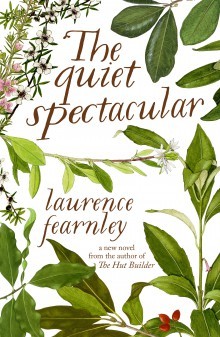
I know that is a terrible thing to say, but I am an unruly reader and have been very honest about my prejudices towards different books. This blog has encouraged me to read books I usually brush off including more by NZ authors. So I picked up ‘The Quiet Spectacular’ by Laurence Fearnley which is set in contemporary New Zealand.

The Quiet Spectacular
Can we take a moment to appreciate how beautiful the cover is.

Fearnley had already won the NZ post book award in 2011 for ‘The Hut Builder’ so I had her pegged as an author worth knowing about. The story is split into three parts, each told from the perspective of a different women, and comes together at the end. The first of these is Loretta, a middle-aged school librarian who is realising her youngest son is growing up and wants to spend less time with her. Loretta has dedicated so much of her time to her children that she is starting to struggle when it comes to knowing who she is as a person. There is also Chance, a teenage girl at Loretta’s school who has one of the most awful mothers in literature history (up there with Mrs Dudley) and feels suffocated both at home and school. Finally there is Riva who lives on the Wetlands and dedicates her time to conservation efforts as she deals with the death of her sister.

The women all come across the wetlands in their own way and find themselves connecting to nature and discovering who they are. Fearnley managed to avoid the stereotypes and cliches you usually see in this kind of story. For example the concept of the women feeling lost and finding themselves again can often be quiet cheesy but it was done in a nature way. I also appreciated that Loretta wasn’t represented as a sensible or boring librarian which so many books seem to to. She had an interest in learning and would do research on famous women explorers throughout the book which is something I can see a lot of librarians doing in their spare time. The same is said for Chance as she wasn’t the classic ‘woe is me’ teenager but was a very realistic girl who I could imagine seeing (or even being myself) at high school.

This was a nice light read but it had a bit more depth then I expected. There were underlying themes such as the relationship between mothers and their children which was touched upon but didn’t go into so much detail that it became the center of the story. While the structure reminded me a lot of Julie Cohen’s ‘After the Fall’ it was much more interesting. I found myself enjoyable a NZ book and wanting to check-out more of Fearnley’s work.

A four out of five stars. Ho-ray for proving myself wrong!

Average reading – The Bone Season

You may have gathered from my post on ‘The Giver’ and ‘The Power’ that I love me some dystopian fiction. That was certainly the theme for 2017 as I read a number of amazing books (‘The Power’ excluded) which had some alternate universe, end of the world theme to them. Unfortunately after reading fantastic ones like Meg Elison’s ‘The Book of the Unnamed Midwife’ and ‘Gather the Daughter’ by Jennie Melamed, my standards are pretty damn high.

The Book of the Unnamed Midwife (The Road to Nowhere #1)Gather the Daughters


Side note: These two books are beyond amazing. If you love a good dystopian or a book with realistic female characters then they are a must.


So that might be why I didn’t get into Samantha Shannon’s ‘The Bone Season.’ It was lacking the wow factor for me and just a bit too complicated to really draw me in. That being said I did finish the book, so there must have been something there (Beauty and the Beast reference, anyone?)

I picked this one up as part of the library’s YA reading challenge to read a book written by someone under the age of 25. After googling this and beginning to feel like an idiot for being 28 and zero books to my name, I came across ‘The Bone Season’ which was written by Shannon when she was just 21. On paper this is everything I love about a book. It is set in a dystopian world (tick), with a female lead (tick) and the first of a series (tick, tick, tick!)

The story is set in 2059 in Scion London. This is a world where some people are clairvoyants and a security force called Scion has deemed this skill to be illegal and gained control over major cities. 19 year old Paige is a clairvoyant who works for the criminal underworld as a dream walker. She has a rare skill and is able to scout people’s dreams to gather valuable information. After accidentally killing two guards one day Paige is kidnapped  by a group of otherworldly creature called the Rephaim. They take her to their underworld city where clairvoyants are used as slaves with the idea they will one day rise up and form the army against Scion. Still with me? I hope so because understanding this much took a bit of googling.

The Bone Season (The Bone Season, #1)

Where the story fails is that a lot of this detail isn’t explained well and it is only about 1/4 of the way into the book that you start to understand what is going on. Then, just as you start to feel comfortable in Scion you are taken out and the story re-sets in Oxford with the Rephaim who are their own confusing thing. I think Shannon fell into the trap of trying to create a new world and forgetting that while she understands it all the reader might need more explanation. The premise of the story begins with a confusing history in which Edward VII conducted a seance which killed many people and lead to the formation of a new London in which people with ‘unnatural’ powers were a thing.  This timeline isn’t explained very well but just mentioned in bits and parts throughout the story and I feel like I would have been able to get into the book more if there had been a brief history lesson at the start. Like I said in my review of ‘The Giver’, good dystopian presents a world that is somewhat similar to ours so we can understand how it came to exist and get sucked into the story.

There were parts of this book that I liked and I did want to keep reading to find out what would happen to Paige. She was a likeable enough character and the romantic/sexual tension between her and Warden (the Rephaim who took responsibility of her in Oxford) had me hanging out for the ending. The story and world Shannon has created are enjoyable enough, it just takes a bit of reading and maybe some internet searching to understand it enough so you can read and take it all in.

Overall I would give this a three out of five stars. It was okay but I can’t say I will bother with the sequel, there is plenty of other dystopian fiction out there which does a better job.

Another Reading Bucket List

I’m not one to make New Years Resolutions but I am a fan of checking stuff off lists. And while these reading bucket lists seem to be everywhere I think they are a great way at motivating people to read more and try books they wouldn’t normally give a second look. A few years ago I had the goal of reading 100 books in a year and achieved it in 2015 after failing the two years before. Since then I have been busy with the masters, but this year I am study-free and surrounded by books all day long. It’s the dream!

So I have a reading bucket list for 2018, it’s mostly pinched from other reading lists but I  made sure to add my own goals in. Mostly the one to read more YA (for the work-related reasons) as well as ‘Pride and Prejudice’ which has managed to escape me all these years.  So here’s my list;

  • Read one YA book a month.
  • Read ‘Pride and Prejudice’
  • Read a book of letters.
  • Read a book with multiple authors.
  • Read a book by an author who uses a pseudonym.
  • Read a bestseller by an author you usually avoid.
  • Read a book about travel.
  • Read a book about a person who has a disability.
  • Read a book about food.
  • Read a book from a nonhuman perspective.
  • Read a book with a red spine.
  • Read a book by an author from a country you’ve never visited.
  • Read a book with a title that’s the character’s name.
  • Read a book set in wartime.
  • Read a book with a month or day of the week in the title.
  • Read a book that’s being made into a movie this year.
  • Read a book by someone you admire.
  • Read a bestseller from 2017.
  • Read a book about an immigrant or refuge.
  • Read a book from a genre you’ve never read.
  • Read a book recommended by an author.
  • Read a book more than 800 pages.
  • Read a book you bought at a used-book sale.
  • Read a book based on mythology.
  • Read a book mentioned in another book.
  • Read a book recommended by your significant other.
  • Read a biography.
  • Read a book by Stephen King.
  • Read a book from a series you’ve never read.

What is on you bucket list?

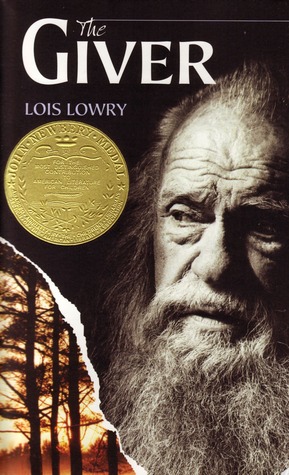
YA Classic – The Giver

As someone who spent most of their childhood reading I am lost at how Lois Lowry’s ‘The Giver’ never made it’s way to me. On the other hand I’m so happy I missed it because getting to read a book like that for the first time is one of the best feelings. I mean don’t you wish you could go back and read Harry Potter for the first time?

One of my new things at work has been immersing myself in the YA library. I can remember being the same at the age and spending my life in the library, but at some point with school and friends it just kind of fell away. I went a long time without really reading during that weird transition from young adult to actual adult which is kind of a bummer when I think about how easily I stopped doing something that I loved so much.

At the end of school reading was the last thing I wanted to do.

With this in mind I have been thinking of ways the library can get our YA users more engaged so they feel comfortable talking to staff and don’t lose their passion for books. One of my projects has been working on the library website to create a teen blog and also writing a YA newsletter which I hope to start printing early next year. As I started thinking up content for these platforms something dawned on me – I don’t really know shit about YA. Sure I loved reading it as a teenager, but that was awhile ago now and the books I read are probably not the bestsellers anymore. In an effort to change this I have been stocking up on YA books including the classics that I somehow missed out on. Enter ‘The Giver.’ I knew this book was a co-workers favorite, I knew it won a ton of awards and gives many people that dreamlike look when they think about it, but I was a bit skeptical as it if it would live up to the hype. It did guys. It really did.

The Giver (The Giver, #1)

‘The Giver’ is set in a world of sameness. There are no colours, jobs are assigned when an individual turns 12 and no-one gets to make any choices such as who to marry. There are benefits to this as without people making choices there are no negative consequences and the people living in this world have never has experiences such as sadness, war or fear. The story follow Jonas who turns 12 and is given the job of the receiver. A person who must be given the entire memories and feelings of the world before and keep them inside for the rest of his life. As Jonas starts to see colours and have feelings of excitement and sadness he begins to question his world.

I started this when I came home from work last Friday and don’t think I moved until I finished. The story has all the elements of a great dystopia in that the world is different but at the same time you can understand how it would come to exist. I can imagine some people wanting to live in a world free of choice and negative experiences and was left questioning if the good would outweigh the bad. I also appreciated that while this was dystopian the world wasn’t over complicated. So often I find that this genre goes into too much detail which can make the story difficult to follow.  While Lowry has created an alternate universe, it functions mostly the same as ours and you are able to step into the story and live alongside Jonas.

I loved ‘The Giver’ for sucking me into a story and reminding me what I loved about reading as a teenager. It left me with questions about free-choice and is definitely a book I can see myself re-reading throughout my life. Five out of five!

Dark humour and old age ‘ The Secret Diary of Hendrik Groen, 83 1/4 Years Old.

Hendrik Groen dislikes the elderly. Unfortunately he lives in a rest-home in the Netherlands which is full of the whinging, complaining and boring people he wants to avoid. To occupy his time, Hendrik writes in a diary which provides a funny and honest account of what it means to reach this point in your life.

Cover image for The secret diary of Hendrik Groen, 83¼ years old

Although this sounds like a bit of a depressing topic, the diary is written in a very funny way as Hendrik is revealed as a mischievous character who refuses to accept his age and the rules imposed on him by the home. This ranges from small acts like hiding unwanted sponge cake in an aquarium (ultimately killing the fish inside) to the larger formation of an ‘old but not dead’ club in which Hendrik and his friends go on monthly outings which often involve large amounts of alcohol. What makes the story so good is Hendrik’s wry comments and self-deprecating humour. He pokes fun at old age and at the residents which will resonate with anyone who has visited a family member in a rest home. I think for me a large part of the appeal was that my Grandma currently suffers from dementia and I could totally see parts of this book playing out in her home. The residents who will sit down at the lunch table an hour early to secure their seat, the ones who don’t see the humour in an April Fools joke about being charged for biscuits at morning tea; it was all too real. Not to sound cheesy, but getting older happens to everyone and finding the humour certainly makes it much more fun.

There is some sadness to the book as one of Hendrik’s friends struggles with early on-set dementia and he often comments on the state of elderly care in the Netherlands including issues surrounding euthanasia. However the book avoids being a depressing account of a rest home by presenting these as facts of life and focusing on the fun Hendrik is having now that he doesn’t have to worry about work. I found this to be a genuinely funny read which left me with a positive outlook on aging. The sequel ‘On The Bright Side: the new secret diary of Hendrik Groen’ comes out next year and I can’t wait to get my hands on it. Five out of Five.